If you've been watching the global snack market lately, you've probably noticed something interesting: the humble jelly pouch is getting a protein upgrade.
What started as a niche fitness product in Japan and Korea has now landed on convenience store shelves across North America, Europe, and Southeast Asia. Protein jelly is one of the fastest-growing categories in the functional confectionery space — and for good reason.
In this post, we'll break down what protein jelly actually is, why it's exploding in popularity, and what it means for food brands and retailers looking to stay ahead of the curve.
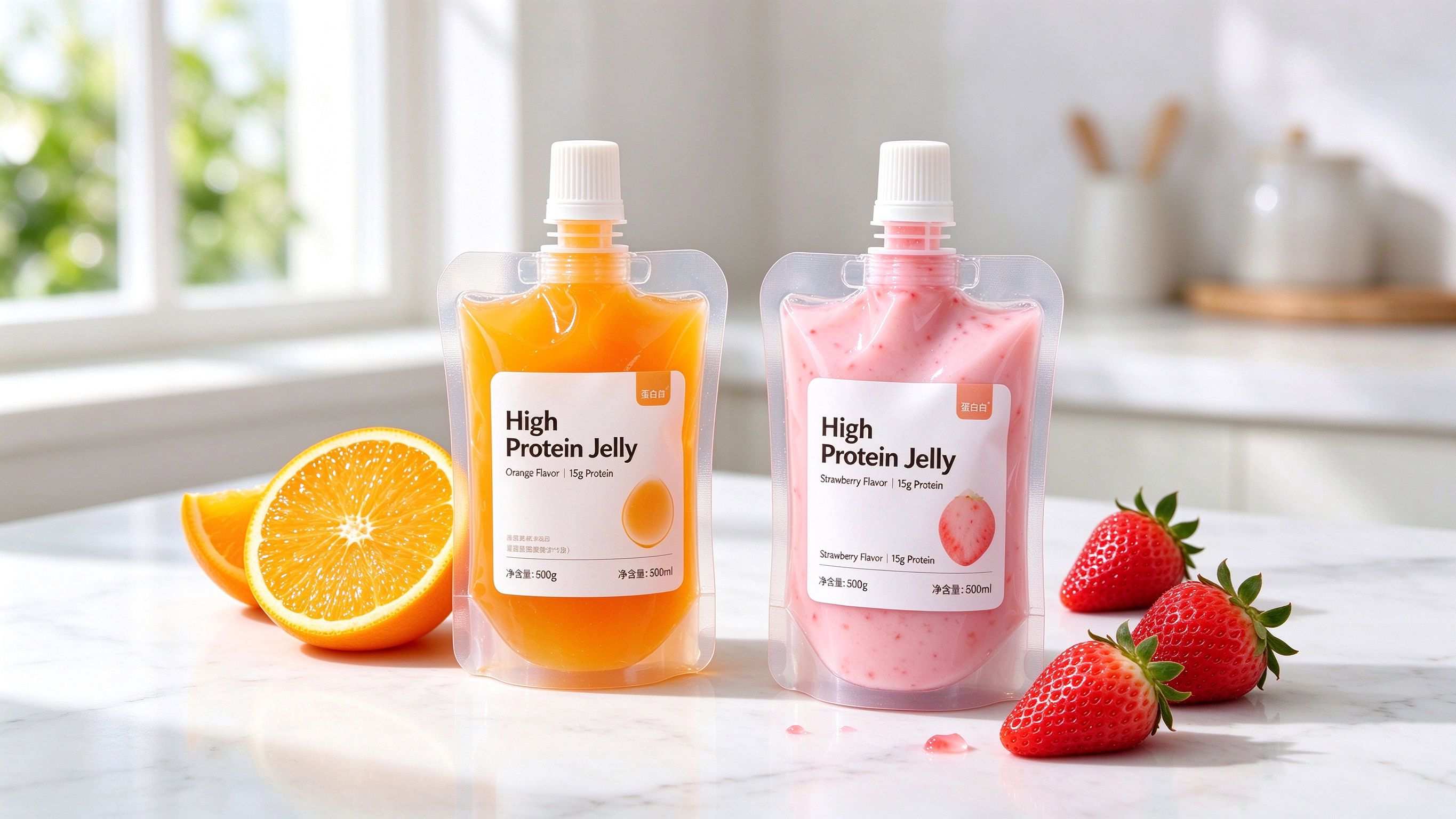
What Exactly Is Protein Jelly?
At its core, protein jelly is a drinkable jelly product in a spout pouch that has been fortified with protein sources. Traditional jelly is mostly water, sugar, and gelling agent — with barely any protein to speak of. Protein jelly flips that script.
A typical protein jelly pouch (around 150–200g) delivers 5–15g of protein per serving, while staying low in calories (usually under 100 kcal). It comes in fruity flavors, has a smooth, squeezable texture, and is packaged in a portable spout pouch you can toss in your gym bag, purse, or desk drawer.
Think of it as the middle ground between a protein shake and a piece of candy — chewier than a drink, more convenient than a bar, and way more fun than a scoop of powder mixed with water.
Why Is Protein Jelly Blowing Up Right Now?
Three big trends are colliding to make protein jelly one of the hottest functional snack categories of 2026:
1. The Global Protein Boom Is Mainstream
Protein is no longer just for gym bros. Innova Market Insights reports that the share of new beverage products claiming "high protein" has jumped from 0.5% to 4.4% in just five years. Consumers of all ages are seeking protein-rich foods — not just for muscle building, but for satiety, weight management, and overall wellness.Thailand: beverage-powerful; innovative pouch and functional drinks.
2. GLP-1 Drugs Are Driving Demand for Convenient Protein
The rise of GLP-1 weight-loss medications (like semaglutide and tirzepatide) has created a huge new audience for easy-to-consume protein. People on these medications often struggle to eat full meals, but they need adequate protein to avoid muscle loss. A squeezable protein jelly pouch is gentle on the stomach, requires no preparation, and fits perfectly into a reduced-appetite lifestyle.
3. Consumers Want Snacks That Actually Do Something
Today's snackers don't just want something tasty — they want something functional. "Better-for-you" is no longer a niche; it's the default. Whether it's added fiber, collagen, vitamins, or protein, people are reaching for snacks that deliver more than just empty calories. Protein jelly checks every box: tasty, low-sugar, portable, and protein-fortified.
What Protein Goes Into Protein Jelly?
Not all protein jelly is created equal. The protein source makes a huge difference in nutrition quality, taste, and texture. Here are the three most common options:
Collagen Peptides: This is the most widely used protein source in jelly products. Collagen is itself a gelling agent, so it pulls double duty — it provides structure to the jelly AND adds protein. It's also budget-friendly and has a neutral taste. Many “beauty from within” products use collagen jelly specifically to target skincare benefits.
Whey Protein Isolate: The gold standard for sports nutrition. Whey is a complete protein with high bioavailability, perfect for fitness-focused product lines. The challenge? Whey can be tricky to work with in jelly formulas — it can affect texture and clarity. It requires precise formulation and processing expertise to get right.
Soy / Plant Protein: For vegan and halal-sensitive markets, plant-based proteins like soy protein isolate or pea protein are essential. They open up the category to vegetarian consumers and religious dietary segments.
Frequently Asked Questions
Q: What is protein jelly?
A: Protein jelly is a drinkable jelly snack in a spout pouch fortified with 5–15g of protein per serving, typically made with collagen, whey, or plant protein sources.
Q: Is protein jelly healthy?
A: Yes, protein jelly is a low-calorie, high-protein snack option that supports muscle maintenance and satiety, especially when made with minimal added sugar.
Q: Can protein jelly be made vegan?
A: Absolutely. Using agar-agar as a gelling agent and pea or soy protein instead of collagen creates a fully vegan, plant-based protein jelly.
👉 Ready to start your private-label or OEM jelly project?
Explore JoyGlo OEM/ODM services or request a free sample & quote (reply within 24h).
About JoyGlo Food
JoyGlo Food specializes in innovative fruit jelly, fruit beverages, sugarcane juice drinks, and OEM/private label manufacturing services.
We offer customized formulations, packaging solutions, and private label development for global partners looking to bring unique beverage concepts to market.